Regenerating Ourselves While Regenerating the Environment
What I Learned from the Regenerative Practitioner Series
I’ve loved the natural world for as long as I can remember. As a kid, I spent much of my time outside turning over rocks at low tide, playing in the forest, and learning about ecosystems by being immersed in them. That early curiosity shaped everything that followed: a BSc in Environmental Science, a Masters in Resource and Environmental Management, and now a PhD in Resource and Environmental Management at Simon Fraser University focused on building a regenerative, equitable seaweed sector in British Columbia.
My work sits at the intersection of marine ecology, conservation science, toxicology, social science, and ecological economics. I’ve contributed to projects ranging from salmon physiology to microplastics, fish population assessments, ecosystem service valuation, and community inclusive fisheries research. But even with this interdisciplinary background, something always felt like it was missing from my education.
The Missing Piece: The Human Dimension
In my experience, working in environmental science during an era of overlapping social ecological crises has made it very clear that resilience isn’t just something ecosystems need. It’s something we need too.
I’ve long been interested in how human values shape environmental decision making, including whose values are prioritized, whose are ignored, and how our own experiences and worldviews inevitably influence our work. Scientists are trained to be unbiased, but we’re also human. We carry our histories, our beliefs, our energies, and our hopes into every project.
So when I encountered Regenerative Development and Design (RDD) during my PhD research, something clicked. Here was a framework that embraced the human dimensions of environmental management. Thanks to support from the Early Career Ocean Professionals and the Students on Ice Foundation, I completed the Regenerative Practitioner Series through the Regenesis Institute between September 2025 and February 2026. This course incorporated concept readings, and 2hr virtual weekly meetings to discuss and apply course content and culminated in a 3-day in-person intensive at Loon Lake in Maple Ridge, BC.
Capturing the Value of Kelp in BC: A Photo Essay
Off the coast of British Columbia, just beneath the surface, entire forests sway in the current. Kelp forests are among...

Regenerating Ourselves While Regenerating the Environment: What I Learned from the Regenerative Practitioner Series
I’ve loved the natural world for as long as I can remember. As a kid, I spent my days outside,...
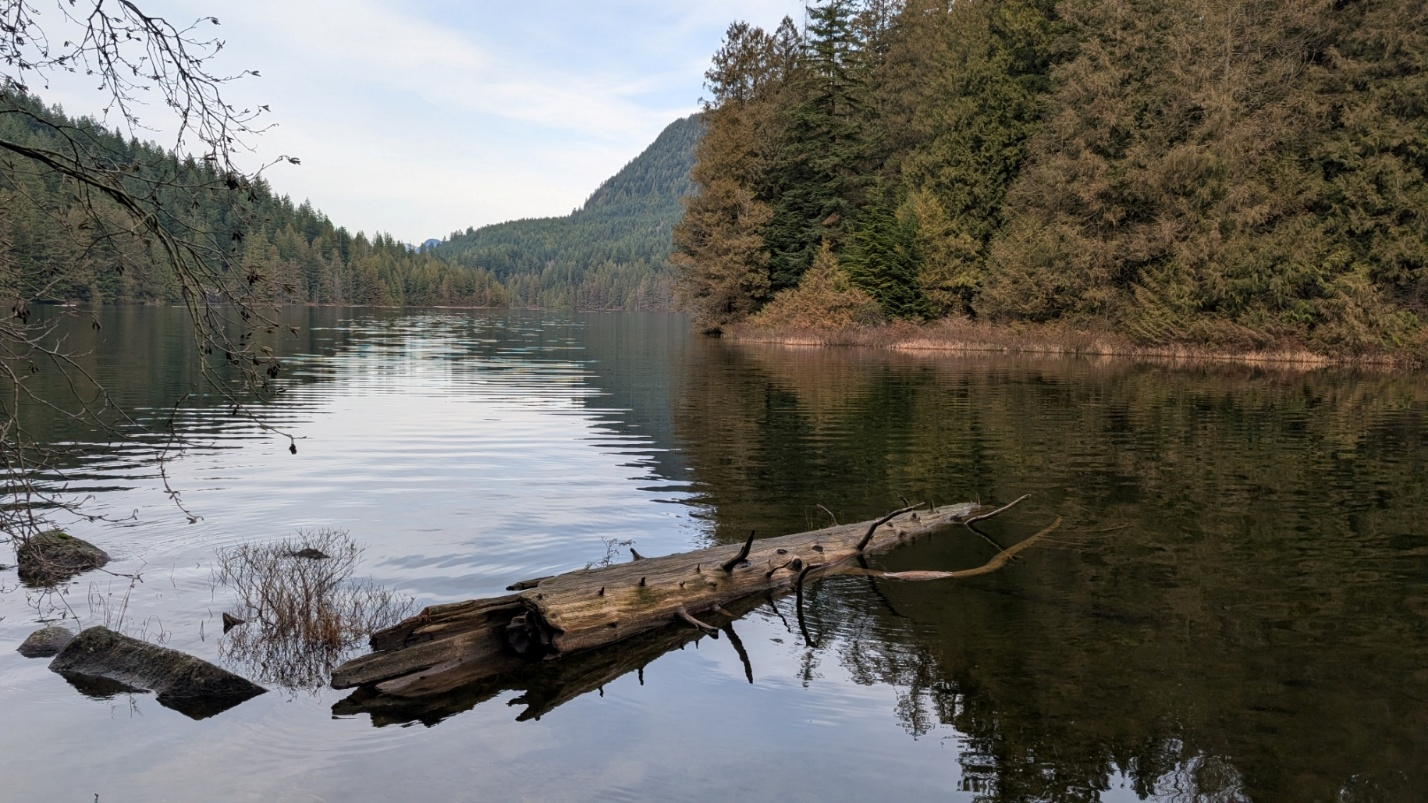
View of Loon Lake, Maple Ridge, British Columbia where the program Regenerative Practitioner Series intensive occurred in Feb 2026.
What Regenerative Development and Design Actually Is
“RDD integrates science and practice with essential but often neglected components of sustainability—ecological, social, cultural, spiritual, and geophysical—as well as their temporal and spatial dynamics. It also addresses the root causes of (un)sustainability: thinking and worldviews” (Gibbons 2020)
RDD focuses on system transformation to restore and renew human and ecological health and relationships, aiming for social and ecological systems to mutually benefit and grow through time. RDD draws from Indigenous Knowledge, Eastern spiritual traditions, and Western science, including biology, quantum physics, psychology, complexity and systems science. RDD seeks to evolve nested living systems (systems from individuals to communities to ecosystems to the planet) into states of higher potential, with deeper vitality, stronger relationships and resilience.
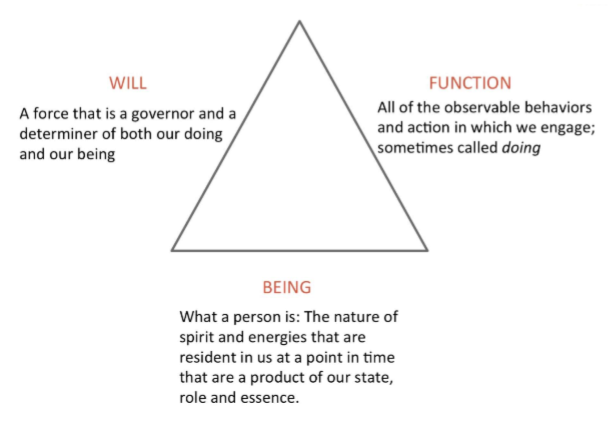
Of the many frameworks used by RDD, two stood out to me as an Early Career Ocean Professional (ECOP). The first was the “Will-Being-Function Framework” which speaks to three aspects of human nature needed for individual and collective resilience. In brief, Function is what we do – it is the ‘getting things done’. Being is who we are and the nature/personality traits we bring into Functioning, where different tasks/roles require different states of Being. And Will is the tenacity, the determination, or the commitment to a project, role, or task. The second RDD framework spoke to the idea of Vitality and Viability, where Vitality is the life force, the passion, the drive of a living system, while Viability is made up of the relationships that generate capacity within a system.
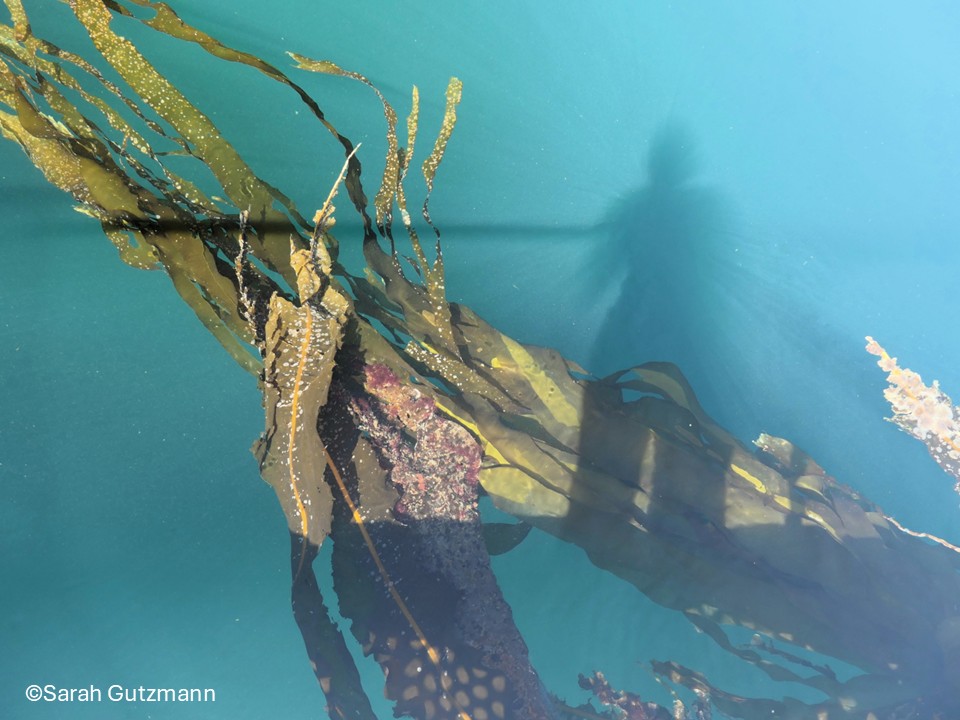
One of the most well-documented drivers of kelp forest decline is the collapse of trophic cascades involving sea urchins. In a healthy kelp ecosystem, sea urchin populations are controlled by predators most notably sea otters, sunflower sea stars, and certain fish species. When these predators are removed or reduced, urchin populations explode, transitioning from selective grazers into destructive barrens-forming machines.
Sea urchin barrens are exactly what they sound like: stretches of rocky seafloor completely stripped of kelp and most other macroalgae, dominated by dense mats of urchins in a low-energy “starving” state. Once barrens form, they are self-reinforcing urchins will continue grazing any new kelp recruits even when food is scarce, preventing natural recovery indefinitely.
Will-Being-Function Framework from Re-genesis Institute for Regenerative Practice (2019)
Why This Matters for Early Career Ocean Professionals
While abstract and hard to wrap my head around at first, these frameworks stood out to me because they highlighted some things I felt for years but hadn’t explicitly discussed in my career so far.
In Western Science (and Western culture more generally) we are trained to prioritize Function. For example, the prestige of a scientist might be measured in how many publications they have produced, how many students they have taught, how many conference talks they have given, or how much grant money have they secured. But all three aspects are needed for regeneration individually and collectively. For example, if your Function (i.e., your job) conflicts with your Being, you may not have the Will to do it (e.g., you might hate your job). Or if you are part of a group program and there is no Will to do the work (even if the group has the best of intentions) the program will eventually peter out; alternatively, the program will not develop even if there is the Will within the group but no capacity to Function. Likewise, without Vitality and Viability a system, whether it be an individual or a collective, will not be able to persist through time.
And I feel like this is especially true for those of us working in environmental management and conservation, where the emotional load is high and the work is often under resourced.
A Critical Reflection: RDD Needs to Be More Accessible
I gained a lot from the Regenerative Practitioner Series, and I plan to integrate RDD into both my research and my personal development. But I also found the terminology dense and sometimes inaccessible. If RDD (like many other disciplines) is to reach early career scientists it needs clearer, more approachable language and learning resources that aren’t locked behind paywalls.
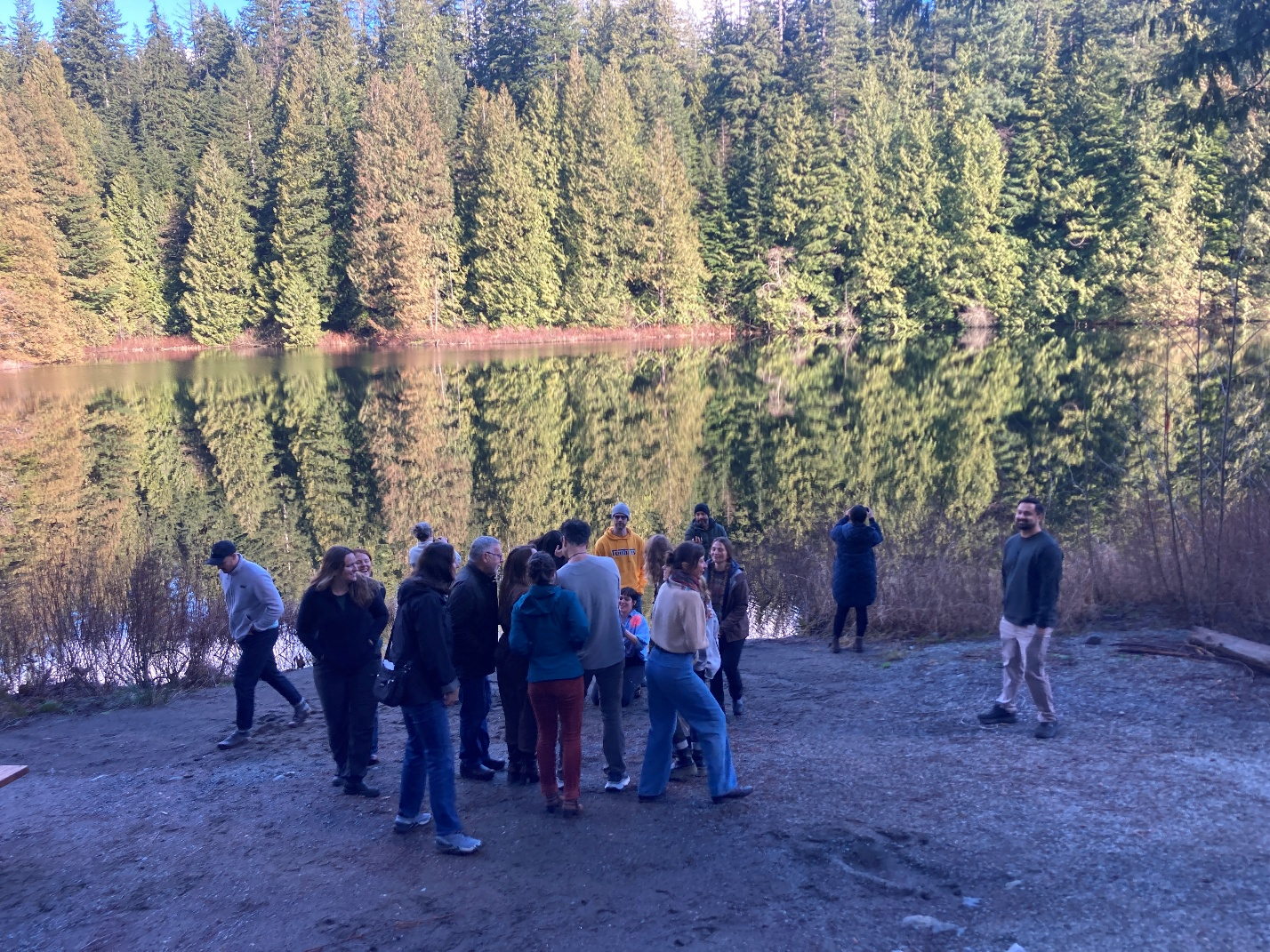
Celebrating the end of the intensive at Loon Lake. Photo by Alex Hutton.
My Takeaway: Regeneration Starts With Us
Ultimately practising RDD will be a lifelong journey – both personally and professionally. But if there’s one thing I hope other Early Career Ocean Professionals take from my experience, it’s this: We cannot regenerate ecosystems if we are depleted ourselves, and we cannot build resilient ocean futures without cultivating our own resilience.
Reference:
Gibbons LV (2020) Moving Beyond Sustainability: A Regenerative Community Development Framework for Co-creating Thriving Living Systems and Its Application. Journal of Sustainable Development 13:p20. https://doi.org/10.5539/jsd.v13n2p20
Regenesis Institute for Regenerative Practice (2019) The Regenerative Practitioner